
Introduction
Artificial intelligence is integrated into many aspects of our lives today, from entertainment to healthcare. Artificial intelligence (AI) has been a focus of research since its introduction to healthcare in the 1970s. It enables improvements in medical disciplines such as diagnostics, treatment protocols, and decision-making (Jessica et al., 2025). The use of AI is leading to major transformations in the pharmaceutical industry, specifically in drug discovery, formulation development, manufacturing, quality control, and post-market surveillance (Huanbutta et al., 2024). Machine learning (ML) and AI are used for extracting biomedical data and building useful patterns. It brings all this information together to allow for more confident decision-making (Cerchia & Lavecchia, 2023).
AI combines data analytics and computer science to “enhance productivity within the field in which it’s applied”. Although its role in healthcare has been a focus for many years, the use of AI in the pharmacy profession is still a newer concept (Jessica et al., 2025).
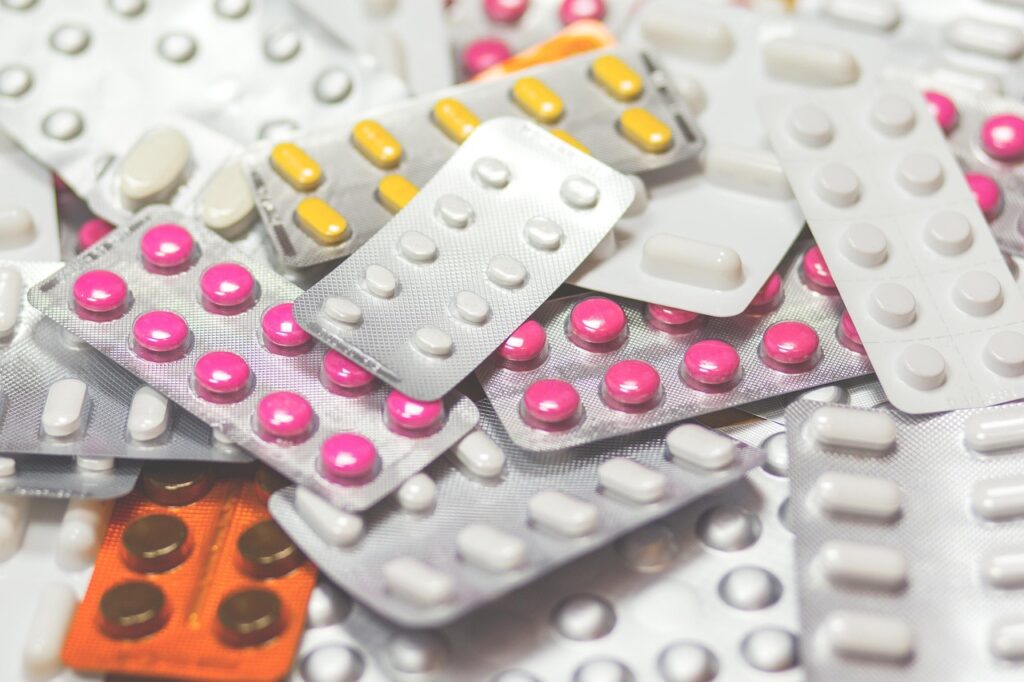
Various Uses of AI
There are two main categories that AI techniques apply to. The first one is supervised learning, where the algorithm is trained on a set of input data to correctly predict the output for unknown data. The second is unsupervised learning, where hidden patterns are pulled for exploratory data or data groups are being made (Cerchia & Lavecchia, 2023).
AI can assist in identifying a drug candidate with high accuracy, predict quality deviations, and ensure reliable product quality. AI algorithms can validate targets by ensuring they are appropriate for the desired therapeutic intervention, which decreases the need to test a hypothesis and saves time. Artificial intelligence plays a role in the virtual screening process by improving accuracy, minimizing false positives, and speeding up the discovery of candidate compounds (Huanbutta et al., 2024).
The use of AI in optimization helps to reduce human bias, explore more in the chemical aspect, and overcome data constraints (Huanbutta et al., 2024). Therapeutic drug monitoring (TDM) strives to make sure that patients receive the right drug, at the right dose, and at the right time (Alowais et al., 2023). AI tools play a role in predicting the absorption, distribution, metabolism, excretion, and toxicity properties of candidate drugs. This method helps to save time in the process. It can also support the awareness of potential adverse effects by extracting information from large datasets. AI can even tailor treatments to individual patients, using their genetic and molecular data (Huanbutta et al., 2024). It provides real-time suggestions to healthcare providers, which leads to support diagnosis and treatment decisions (Alowais et al., 2023).
The use of AI in pharmaceutical formulation allows for the process to be more efficient, precise, and cost-effective, compared to traditional methods. Artificial intelligence also plays a role in quality control, specifically the use of ML. These systems catch flaws, irregularities, and deviations from standards (Huanbutta et al., 2024).
AI allows for efficient inventory management. Inventory management is important for minimizing costs, optimizing resource utilization, and ensuring timely product availability to meet customer demand by extracting from historical data (Huanbutta et al., 2024).
AI could support population health management, as it allows for a quick extraction of the drug-related information from various sources, and could do a quick review. This could benefit the role of patient education, which could lead to better patient compliance with medication (Alowais et al., 2023).
Lastly, AI can support pharmacy operations. It can continuously address regulatory issues at a low cost. Artificial intelligence organizes regulatory procedures and allows for the consistent production of high-quality products. It keeps the regulation up by performing post-market surveillance (Huanbutta et al., 2024).
Artificial Intelligence Examples
ChatGPT is an AI language model that has the potential to identify medication interventions. Medication therapy management (MTM) improves patient outcomes, provides economic benefit, and reduces the need for additional medication. AI can be used to track drug-drug interactions for each patient (Roosan et al., 2024). Similar to the explanation of AI above, ChatGPT uses information from large datasets to gather data.
Implementation of technologies such as Lumio Medication improved accuracy and efficiency in error flagging. Within a 2-week study period, the Lumio Medication found 74% of the prescriptions that would require pharmacist review. In the entire 23-day period, it intercepted 94% of severe drug-related problems, which is an upgrade from prior methods (Jessica et al., 2025).

Discussion
Currently, the focus of AI use in pharmacy practice revolves around pharmacist task prioritization and workload. AI integration in the pharmacy, however, has yet to advance. Current advancements already made are leading to decrease in cost, increase in accuracy, and better inventory management.
References
Alowais, S. A., Alghamdi, S. S., Alsuhebany, N., Alqahtani, T., Alshaya, A. I., Almohareb, S. N., Aldairem, A., Alrashed, M., Bin Saleh, K., Badreldin, H. A., Al Yami, M. S., Al Harbi, S., & Albekairy, A. M. (2023). Revolutionizing healthcare: the role of artificial intelligence in clinical practice. BMC Med Educ, 23(1), 689. https://doi.org/10.1186/s12909-023-04698-z
Cerchia, C., & Lavecchia, A. (2023). New avenues in artificial-intelligence-assisted drug discovery. Drug Discov Today, 28(4), 103516. https://doi.org/10.1016/j.drudis.2023.103516
Huanbutta, K., Burapapadh, K., Kraisit, P., Sriamornsak, P., Ganokratanaa, T., Suwanpitak, K., & Sangnim, T. (2024). Artificial intelligence-driven pharmaceutical industry: A paradigm shift in drug discovery, formulation development, manufacturing, quality control, and post-market surveillance. Eur J Pharm Sci, 203, 106938. https://doi.org/10.1016/j.ejps.2024.106938
Jessica, H., Britney, R., Sarira, E. D., Parisa, A., Joe, Z., & Betty, B. C. (2025). Applications of artificial intelligence in current pharmacy practice: A scoping review. Res Social Adm Pharm, 21(3), 134-141. https://doi.org/10.1016/j.sapharm.2024.12.007
Roosan, D., Padua, P., Khan, R., Khan, H., Verzosa, C., & Wu, Y. (2024). Effectiveness of ChatGPT in clinical pharmacy and the role of artificial intelligence in medication therapy management. J Am Pharm Assoc (2003), 64(2), 422-428 e428. https://doi.org/10.1016/j.japh.2023.11.023