
You are in bed in the hospital watching TV when your nurse walks in. She logs in to the computer and reviews a few items. She starts moving seamlessly across the room with your medications, both IV and oral. In between each item, she scans and looks at the screen. At one point, it seems that the IV isn’t scanning, and she sounds like she must troubleshoot what is going on. As she scans each medication, the computer helps her verify the medication and its administration details. When the IV medication does not scan as expected, she pauses to troubleshoot the problem. Although barcode scanning is one technology used to support medication safety, it raises a broader question: how effectively do the hospital’s different systems communicate with one another? If information must be re-entered manually or fails to transfer between systems, some safety checks may be less effective than intended.
Introduction: A Hospital Full of Technology, yet a Medication Error is Still Possible
Manually transferring information between systems can introduce opportunities for error. Each additional manual handoff can introduce an opportunity for transcription errors, misinterpretation, or delays, particularly when information must be entered into multiple systems. If healthcare technology is designed to improve safety, what happens when different systems cannot communicate effectively? Likely, it decreases the effectiveness of safeguards. Digital technology can improve medication safety, but its effectiveness depends partly on how well systems exchange information and how safely the hospital staff uses them.
What Does it Mean for Healthcare Devices Not to “Talk” to Each Other
Three concepts are central to understanding medical device communication and safety: interoperability, which is the ability of different systems to exchange and use information; integration, which is how systems or devices are connected within a clinical workflow; and data consistency, which is whether the information displayed across systems remains accurate and up to date.
There is a difference between a hospital owning several advanced technologies and the ability of those technologies to actually share usable information.
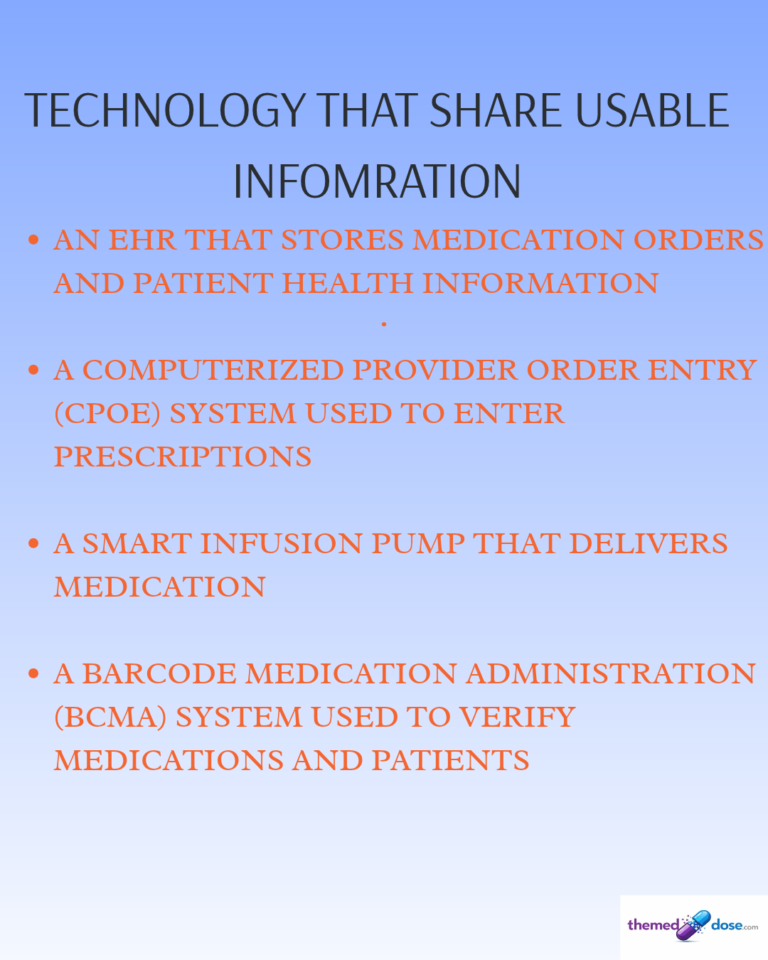
These systems may be connected to varying degrees; not every hospital uses the same configuration for the different devices.
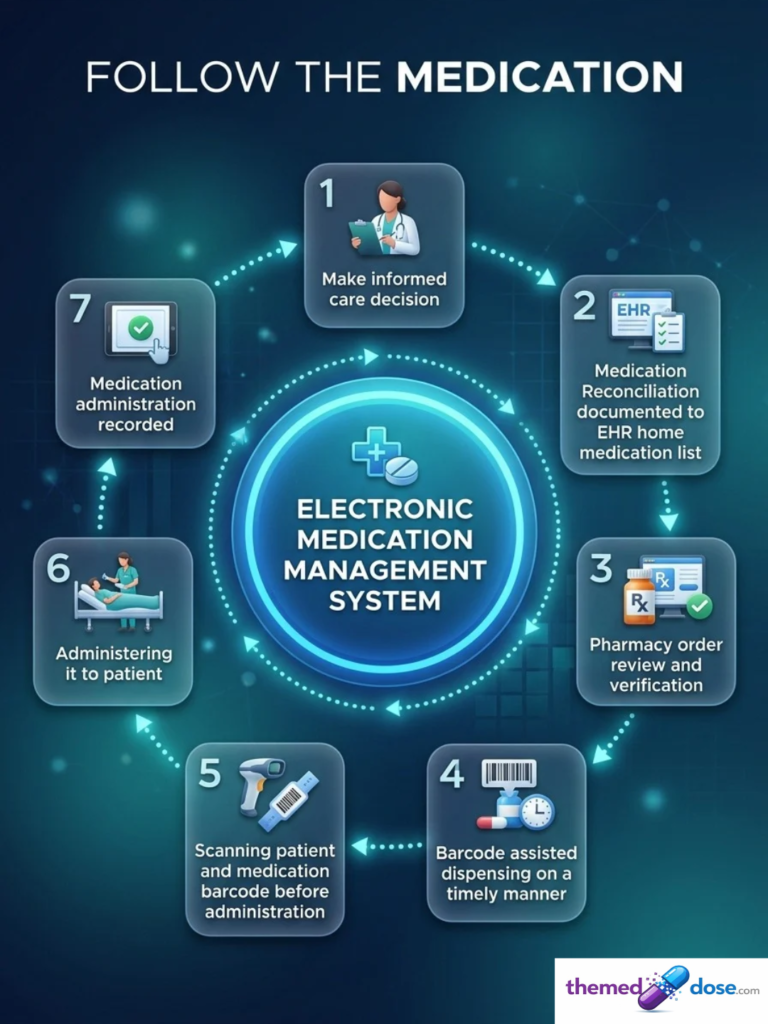
Where the Disconnect Happens: Following a Medication Through the Healthcare System
Fragmented technology can affect medication workflows.
- Prescribing: a clinician enters a medication order into the EHR
- Verification and dispensing: the order is reviewed, processed, and prepared for administration
- Administration: information may need to be transferred or entered into a separate device or workflow
- Documentation and monitoring: administration records and patient responses must be documented and reviewed
Several gaps can emerge throughout the medication-use process. Medication orders that must be manually re-entered bypass some of the safeguards. There could be differences between medication names, concentrations, units, or other order details. Delays in updating medication lists are an error that technology likely won’t pick up. Administration records may not automatically transfer to the appropriate system, and manual checks by the staff may still be needed, although they do not have all reconciled information.
The Smart Infusion Pump: When Connectivity Matters
Medication administration errors remain an important patient-safety concern. A 2020 review by Kirkendall and colleagues cited estimates of approximately 4,000 preventable injuries from medication administration errors per hospital annually. Smart infusion pumps are one technology designed to reduce certain medication-related risks, but they cannot prevent every error1. The smart infusion pump uses drug library software to reduce drug errors. However, while new technology can be beneficial, it could bring new errors2. Interoperability can allow an infusion pump to receive medication-order information from an electronic health record.
Using smart infusion pumps reduces manual programming and transcription steps, making the order less susceptible to error. Integrated systems still require appropriate configuration, verification, maintenance, and clinical judgment. Risks may increase when integration is absent or incomplete. The five main categories of infusion pump-related errors include undocumented orders, drug library errors, programming errors, administration errors, and ancillary equipment errors 1.
Why More Technology Does Not Automatically Mean More Safety
Human factors and workarounds are contributors to potential risks. When systems are slow, cumbersome, or poorly integrated, staff may develop workarounds to keep care moving. Time pressure and staffing constraints may encourage workarounds. Incorrect or incomplete data can also pose possible barriers to safety. A connected system can transmit information accurately even when the original information is wrong. Connectivity does not guarantee clinical correctness.
Alert fatigue and alarm overload may overwhelm the staff, as excessive or poorly prioritized alerts can make the important warnings harder to recognize. Read more about alert fatigue here. Errors due to alert fatigue and alarm overload are different from interoperability communication errors. Inadequate training and incorrect system configuration can undermine safety. Even well-designed technology depends on appropriate implementation, maintenance, staff training, and workflow design. Technology allows for information to move more efficiently, but it cannot independently guarantee that the information is correct or that every clinical decision is safe. Proper information is vital to the efficiency of interoperability. Using broader resources and input from the clinical setting should be used to gather the medical device information of the most effective devices 3.
Beyond Infusion Pumps: Other Examples of Fragmented Healthcare Technology
There are various examples of fragmented healthcare technology.
- Barcode Medication Administration: Patient and medication verification can be weakened when barcode workflows are bypassed, or systems do not function as intended.
- Electronic Medication Reconciliation: Medication lists may differ across hospitals, outpatient clinics, and pharmacies. Read more about reconciliation here.
- Connected monitoring devices: Data from monitoring equipment may not be available in the right clinical system or workflow when needed.
How Healthcare Organizations Can Reduce These Risks
These risks can be reduced in many ways. Changing the system design allows for appropriate interoperability standards and validates data exchange between systems. A change in clinical workflows could reduce necessary manual data entry and establish clear verification procedures. Staff should be trained on device limitations, safe use, and reporting problems. When monitoring, there should be a review for medication errors, near misses, overrides, and system-related workarounds. For implementation, the team should test integrations under realistic clinical conditions before deployment and after significant changes. Lastly, for governance, involve pharmacists, nurses, physicians, clinical informaticians, IT teams, and biomedical engineering professionals.
The Pharmacist’s Role in a Connected Healthcare Environment
A pharmacist is responsible for reviewing medication orders and identifying inconsistencies. They should also participate in the development and maintenance of medication libraries. Helping to assess drug concentrations, dosing units, and clinical decision-support rules is another important role given to the pharmacist. Additionally, a pharmacist should report technology-related near misses and recurring workflow problems. Pharmacists commonly collaborate with nursing, informatics, IT, and biomedical engineering teams to improve systems or catch flaws. Lastly, a pharmacist evaluates whether new systems improve medication safety without introducing new risks.
Conclusion: Connecting Systems is Only the Beginning
Disconnected systems can create avoidable opportunities for medication errors. Interoperability can reduce certain manual steps, but it does not eliminate every risk. Safer medication use requires reliable technology, thoughtful workflows, and trained professionals working together. The goal is not simply to make healthcare devices communicate. It is to make sure the information they exchange supports safer decisions and safer patient care.
References
- Kirkendall ES, Timmons K, Huth H, Walsh K, Melton K. Human-Based Errors Involving Smart Infusion Pumps: A Catalog of Error Types and Prevention Strategies. Drug Saf. Nov 2020;43(11):1073-1087. doi:10.1007/s40264-020-00986-5
- Shah N, Jani Y. Implementation of Smart Infusion Pumps: A Scoping Review and Case Study Discussion of the Evidence of the Role of the Pharmacist. Pharmacy (Basel). Dec 16 2020;8(4)doi:10.3390/pharmacy8040239
- Weininger S, Jaffe MB, Goldman JM. The Need to Apply Medical Device Informatics in Developing Standards for Safe Interoperable Medical Systems. Anesth Analg. Jan 2017;124(1):127-135. doi:10.1213/ANE.0000000000001386
Author Bio
I am a clinical research professional and pharmacy technician with experience in pharmacy practice and medication-related topics. I am passionate about medication safety, healthcare education, and making complex healthcare information easily accessible. Through TheMedDose, I share practical insights on medications, pharmacy practice, and patient safety to help the public better understand the impact of medications in everyday care.